
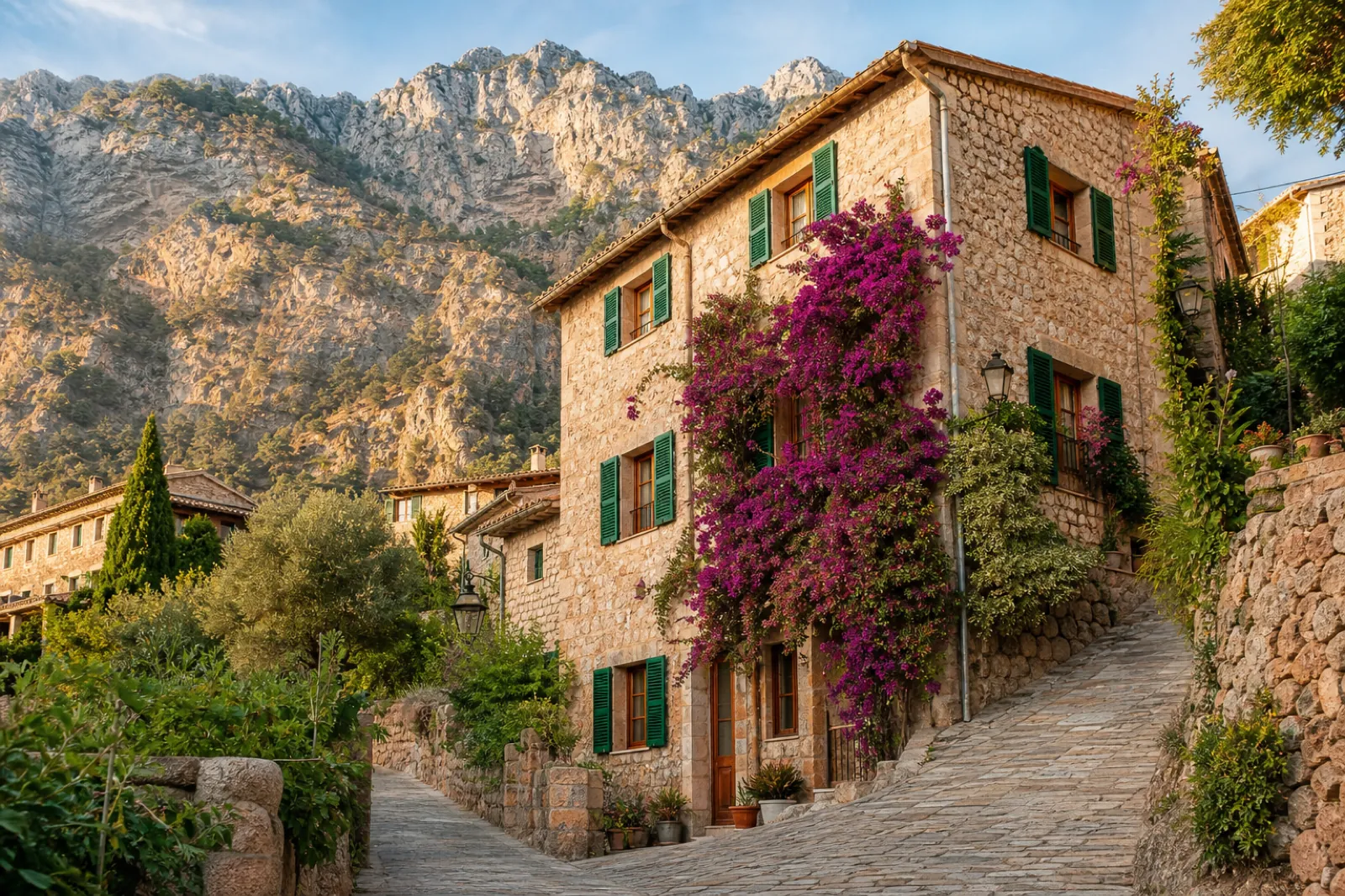
Deià is not a place to show in a hurry. You walk it, you smell it in May, you look across the valley with attention and, above all, you respect it. The person who buys here has been thinking about this village for years, not about Mallorca in general. That changes the entire way you sell.
The typical Deià buyer arrives through cultural sensibility, not real-estate window-shopping. They usually carry literary, musical or artistic references linked to the village. They know the Ma-10 road shapes daily life, mobile coverage is patchy and the town hall is demanding on materials and volumes.
What matters here is not how many square metres the house has, but how it feels to have breakfast looking towards the Teix.
How a Deià buyer decides
Three questions any serious buyer asks before a second viewing: how much winter sun the house gets, what works have been done legally, and who the previous owners were. The third is the most underestimated: Deià buyers care about the lineage of a house and its coherence with the village.
- Winter sun matters more than on the coast: not every orientation works.
- Stable parking close to the property is a real variable, not decorative.
- Any work done without clean permits becomes a discount trigger, or a no-offer.
What to prepare before talking about price
Deià houses that sell fast almost always have a clear story and an owner ready to tell it. The ones that drag usually have an inconsistent dossier and a price based on the owner's emotional value, not on what a buyer can defend with their lawyer.
A frequent question, short answer
Does the exact street really matter?
Yes, quite a lot. Deià has streets in shade all day, streets that echo the Ma-10 and streets that feel like another village. Buyers notice this by the second viewing.
Should I renovate before selling?
Rarely structurally. Almost always cosmetically: honest paint, a cared-for garden, materials coherent with the village.
Selling in Deià is waiting for the right buyer, not convincing the first one who walks by.