
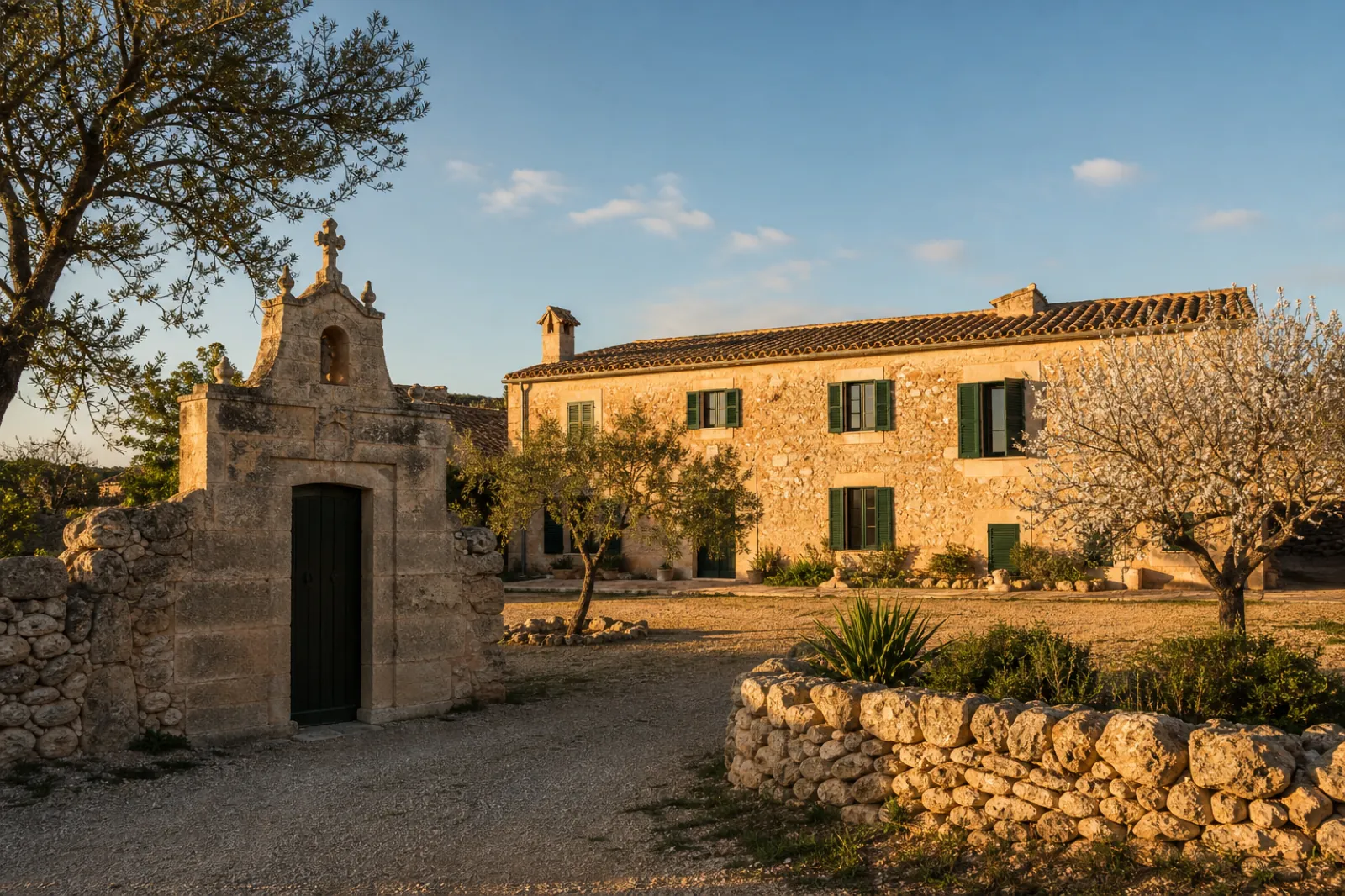
What makes south-east Mallorca special
Santanyí and its surroundings (Cala Llombards, Cala Santanyí, Es Llombards, Calonge, Cas Concos, Ses Salines) attract buyers who want authentic Mallorcan countryside, quality of life and accessible coast. It is neither Andratx nor Pollensa: the profile is calmer and more patrimonial.
Typical buyer profile
The Santanyí rustic-finca buyer is usually German, Swiss, French or Nordic, with clear criteria and patience to wait for the right property.
- Wants real countryside: dry-stone walls, almond and holm oaks, open views.
- Looking for a calm primary or secondary home, not a trophy.
- Values privacy, orientation and ease of maintenance.
- Appreciates clean urban-planning paperwork.
Which properties work best
Mid-sized fincas (3–5 acres or more), restored or restorable Mallorcan house, paved access, reasonable utilities.
- Main house with noble materials and real joinery.
- Legalised pool or buildable plot for it.
- Well, water or reasonable supply studied case by case.
- Clear vehicular access and a quiet neighbourhood.
Common mistakes in this area
On rustic land, mistakes are expensive because they limit the buyer and their lawyer from the very first review.
- Listing without checking real built surface against cadastre.
- Not disclosing unlegalised pools, extensions or outbuildings.
- Comparing with fincas that differ in hectares or access.
- Generic photos that don't convey Mallorcan character.
Documents worth reviewing
A serious rustic-finca sale carries coherent, not perfect but explainable, paperwork.
- Land registry and deed matching actual construction.
- Original licences and, where appropriate, new-build declarations.
- Habitability certificate where applicable.
- Energy certificate, property tax and registry charges verified.
Recommended strategy
Document first, photograph next and release with discipline. On rustic land, a serious buyer rewards early transparency with trust during negotiation.