
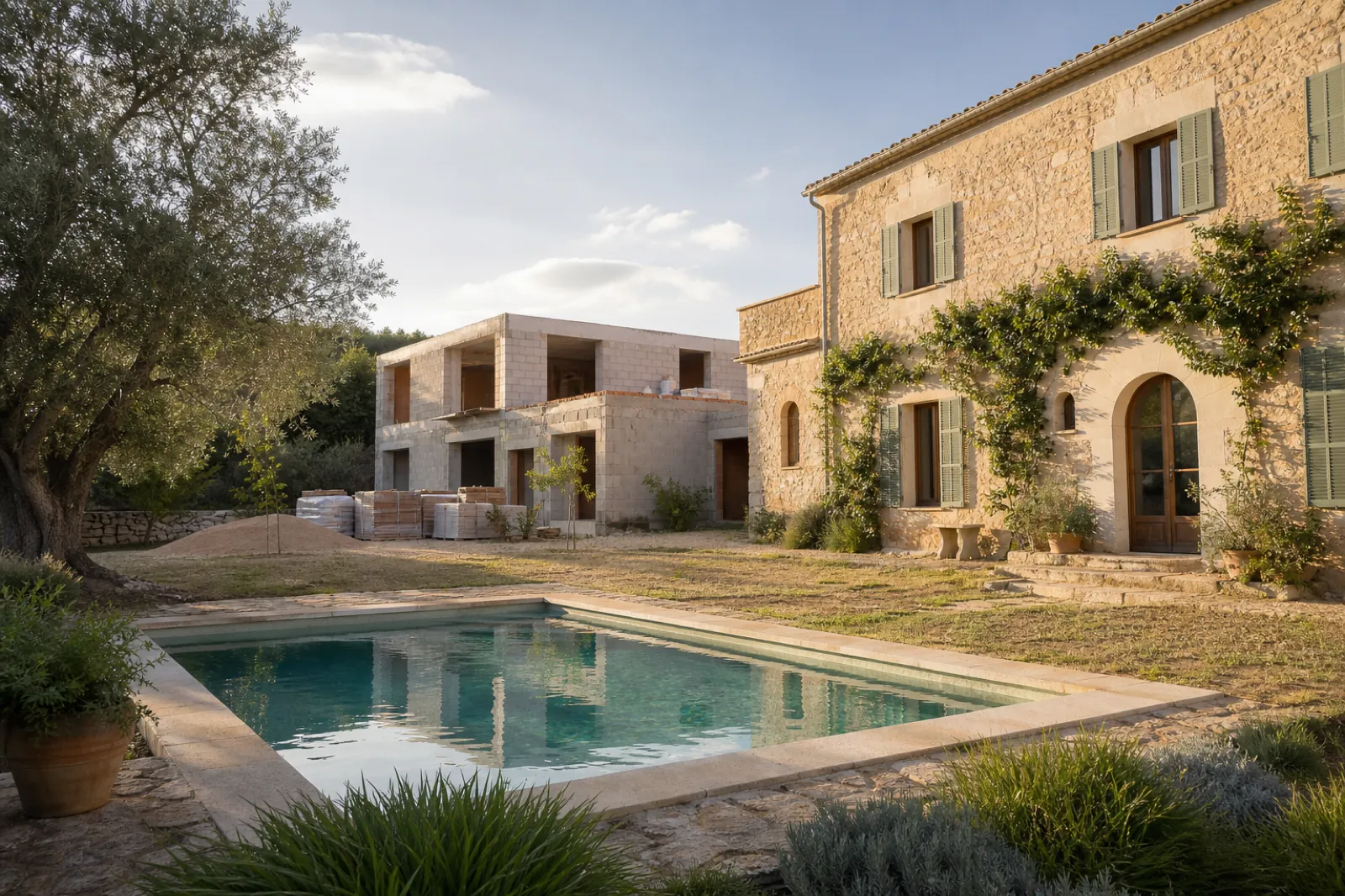
Why this topic decides many sales
A significant share of rural Mallorca homes have unregistered or unlicensed elements: pools, sheds, garages, annexes, terraces, basements or extensions. For an international buyer assisted by a lawyer, this is one of the top reasons for an offer cut or deal collapse.
What "unlegalised" really means
Without going into legal detail, three situations are useful to distinguish.
- No licence and no registration: the work exists physically, not in deed or cadastre.
- Partially registered: cadastre or deed shows part but not consistent with reality.
- Out of planning: there was permission once but today's regulation wouldn't allow the work.
Risks if left unaddressed
When a serious buyer spots this, the deal complicates.
- Significant offer reduction.
- Deal collapse on lawyer's advice.
- Buyer's bank financing refused.
- Uncertainty over future use and future sales.
Owner options
You don't always have to legalise everything before selling. There are paths.
- Regularise (consolidated and prescribed works can have new-build declaration paths).
- Transparency and adjusted price, with the buyer inheriting the situation.
- Demolish problematic elements before selling, in some cases.
- Sell to a professional buyer with rural experience, willing to take the path on.
Documents worth preparing
Documented transparency beats any sales argument.
- Updated technical drawing of the actual state.
- Documentary photography before/now.
- Cadastre, deed and registry aligned or with the discrepancy explained.
- Technical report on age and prescription, where applicable.
Recommended strategy
Diagnose first, be transparent next, position price against reality. A serious buyer prefers to inherit a clear situation than discover it during due diligence.